

Coding Challenge Inside Bloomberg
ETH Studio New York offered the winners of a CodeCon programming contest a tailor-made mini-internship at Bloomberg in New York Ci...

Stories from around the Globe



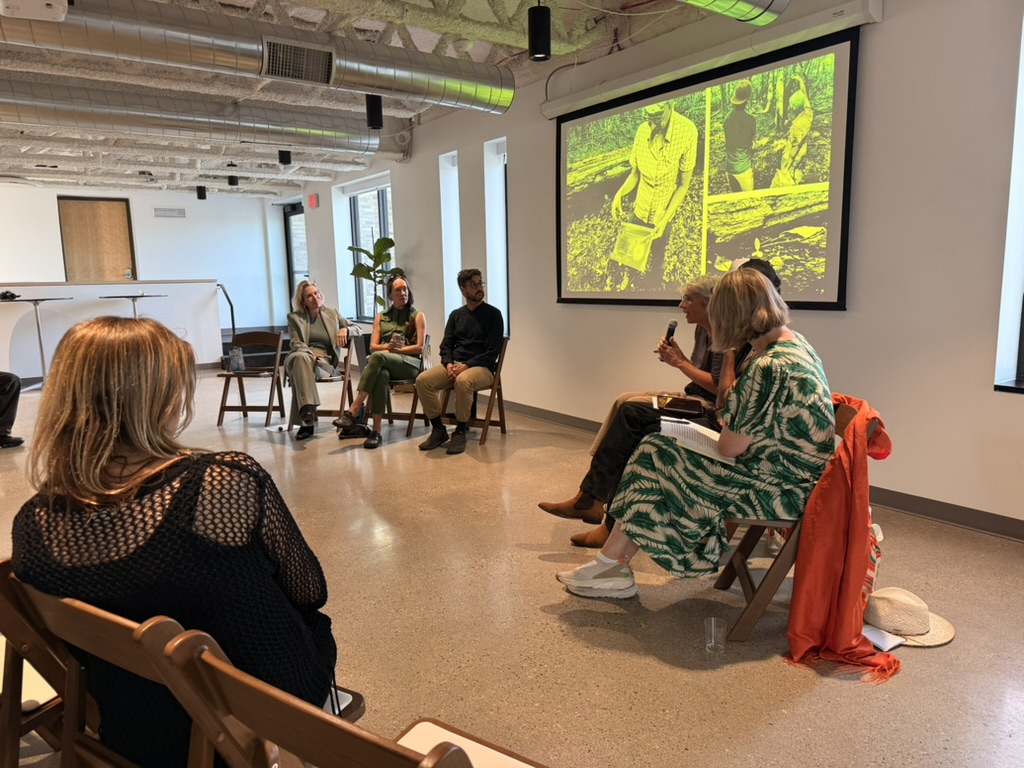
At Ecologies in Motion, part of Detroit’s 2026 Month of Design festival, we asked: what does it mean to be part of a city’s ecology? We gathered at Kintsugi Village, a Detroit gathering place for education, arts, food and community events.
Brightside Collective, which helps communities create places where people and nature flourish, co-created the event with Swissnex in Boston and New York, part of Switzerland’s global network for education, research and innovation.
For us, both ETH Circle ambassadors, the gathering connected our time at ETH Zurich with our work today.
Five speakers brought distinct perspectives: choreographer Biba Bell of Wayne State University; forest practitioner Karin Hilfiker of Waldstudio, a Swiss forest and coaching practice; ETH Zurich urban researcher Julio Paulos; landscape historian Anette Freytag of Rutgers University; and land steward jøn kent, co-founder of Detroit compost producer Sanctuary Farms and Founder and Executive Director of Sacred Spaces, a Detroit nonprofit advancing environmental justice, food sovereignty, and nature equity through land stewardship and community-led development.

At Kintsugi, on a once-underused plot, Brightside and its partners had created a pocket forest, meadows, pollinator habitat and a food garden. Biba brought the landscape into motion with Wayne State dance students and musician Matthew Daher. She described how we “move through and with the city”, alongside other forms of life.


This relationship begins with attention. For Karin, this means: “Pausing, looking with different eyes, being curious and open-minded”. Touring North Corktown with Brightside’s Bre Williamson helped her see through someone else’s eyes.

That attention can reveal overlooked knowledge. Julio, who had noticed nature breaking through street asphalt that morning, was struck by “how much ecological knowledge grows from everyday relationships with a place”. People who tend land deserve a voice in its future.
Anette explored designing with this everyday nature through Swiss landscape architect Dieter Kienast’s work. From the 1980s, Kienast brought design and ecology together, embracing spontaneous vegetation and making cities legible through landscape. He considered how people’s experience of public spaces could benefit physical and mental health. Our discussion turned to the importance of trees, parks and gardens close to home: a network of nature for all living beings.
For Bre, sustaining this network means “caring for an interconnected system” of land, buildings and relationships across generations. jøn extends that care beyond people: we are “not separate from nature, but participants in a much larger living community”. Care means respecting the land’s history and making space for other life.


Such care can start at home, as Brightside’s Sherrie Forrest reminds us: “I planted a few native Michigan plants in my small front yard and the bees and butterflies showed up”. Nature accompanies her morning coffee.
Across our different disciplines and places, we found a shared concern: how to make nature part of everyday city life, and how to care for it together.
