
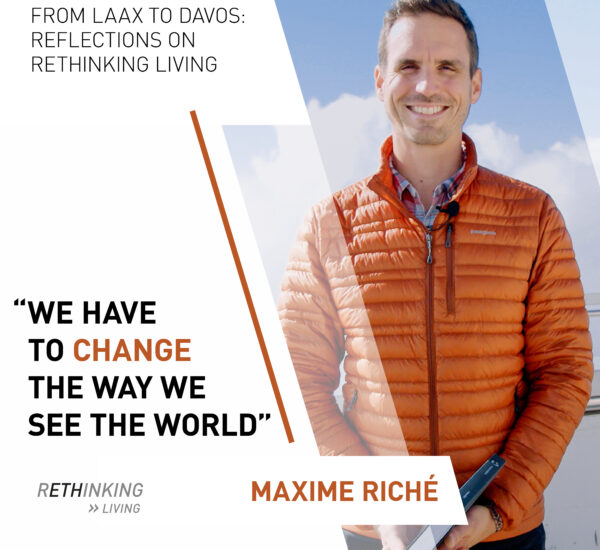
From Laax to Davos: Reflections on RETHINKING LIVING, Ep. 2
Episode 2: Maxime Riché, Photographer and Director

Stories from around the Globe
Hey there, I am Jean Louis. When I began my Master’s in Comparative and International Studies (MACIS) at ETH Zurich, I expected to move between research, data and policy. I did not expect that one of my most valuable lessons would come from learning how to connect institutions.
During my traineeship in Data and Partnerships with the Director’s Office of UNITAR’s Division for Prosperity in Geneva, I had the opportunity to work across background research, concept notes, project documents, landscape analysis, programme implementation, data analysis, monitoring and evaluation, partnerships, and strategic planning. The United Nations Institute for Training and Research (UNITAR) provides innovative learning solutions to individuals, organisations and institutions to strengthen global decision-making and support action at the country level. Its work made me curious about how research and expertise can be translated into practical solutions that help institutions address real-world challenges.


Being both an ETH student and part of a UN organisation placed me in an unusual position. I often found myself looking at the same challenge from two perspectives. On the academic side, there was deep technical knowledge and research expertise. On the UN side, there were very concrete operational needs. I became increasingly interested in how we can make those two worlds connect more effectively.
This became especially concrete when I identified an opportunity for collaboration between academic institutions and international organisations. What started as a simple connection developed into institutional discussions, concept development, budgeting and project coordination. The collaboration eventually led to a successful project submitted through the IGAIP funding call, designed to connect UN entities with research groups and strengthen the UN’s capacity to deliver its mandate in the age of AI.


This experience also introduced me to opportunities to connect academic expertise in AI with practical learning needs in international organisations. Being familiar with both academic and institutional environments allowed me to help facilitate communication between stakeholders and explore potential areas of collaboration.
This experience changed how I understand partnerships. I think they are not simply agreements. They depend on people who understand different organisational languages, recognise opportunities and keep the momentum going.
I saw the same situation at a broader level through my contribution to data analysis task linked to the UN80 Initiative Action Plan. It reinforced the same lesson: expertise creates greater value when institutions are able to connect their knowledge, resources and people effectively.
Alongside partnership development, I contributed to the implementation and impact evaluation reporting of three programmes over nine months, using surveys, data analysis and Power BI. I also explored how causal-inference methods could strengthen the evaluation of the training.


My ETH training in research methods, causal inference, AI and policy analysis strongly shaped how I approached this work. It gave me the tools to question assumptions, analyse evidence and think carefully about methods to analyse the impact effectively
Looking back, what I value most is not only that a project moved forward, but that I learned how much initiative can matter. Large institutions may appear difficult to connect, but collaboration often begins with noticing that two sides have something valuable to offer each other. My experience between ETH Zurich and UNITAR taught me that I enjoy working in exactly that space: between research and implementation, data and policy, and institutions that can achieve higher impact when they work together.
