
Energy access for all: we can make it togETHer!
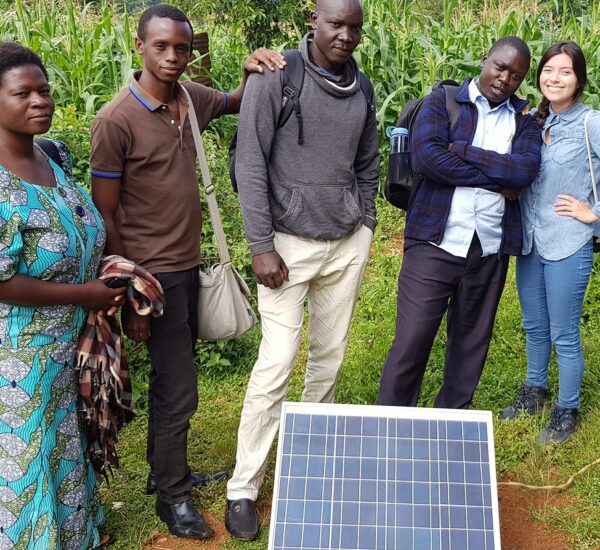
African sunsets have something special. They always feel unique, intense and bring a fresh wind of hope.

Stories from around the Globe
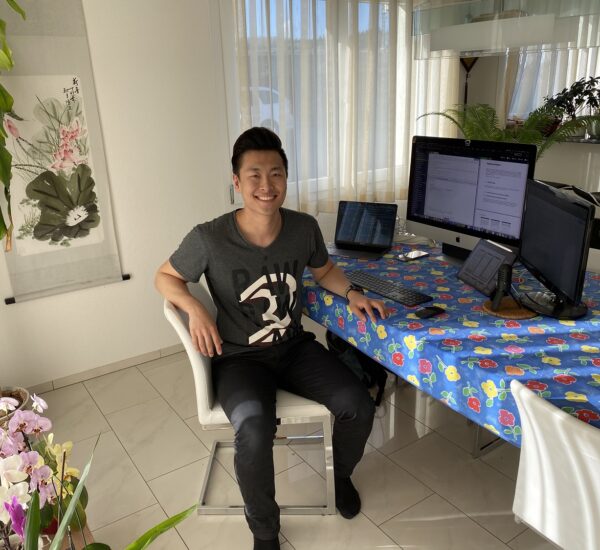

Simon Stähler looks back at himself and the world after 25 years (you can scroll down for the German version).
It is Friday, 11 September 2026; 25 years after the day that radically changed the lives of so many people—and, on a small scale, mine as well. I had been invited to a first interview on 20 September for an Aerospace Engineering degree at MIT; my dream of taking a first step into space research. On 14 September 2001, I received a call telling me that this round of interviews had been cancelled because of the global situation. In the general uncertainty, I buried the dream and studied physics in Germany. Over the following years of my physics studies, space drifted further and further away from me, and the 2000s were the decade of particle physics.
At some point, I discovered geophysics: the method of using physics to look inside the Earth or another planet. To this day, I have never lost that fascination: using waves or radar to see through the subsurface, something that is so close to us yet completely inaccessible. I was lucky, and some of the methods I developed over time proved useful to NASA in 2016, when they were planning a mission to Jupiter’s moon Europa; so I really did work as a consultant for NASA! And I was even luckier, because two years later, a geophysical mission landed on Mars for the first time, with the participation of ETH Zurich. By then I was working here, and I was able to become one of the first people to use data from Mars to look inside the planet—to detect marsquakes and to “hear” meteorite impacts through the ground.
Today is the last weekend before the semester begins, and on Monday I will stand in front of 45 new students. Forty-five people, most of whom did not experience September 11 themselves, will embark on a path that did not exist back then: they will study Space Systems at ETH Zurich and learn from us how to build spacecraft, how to design a scientific mission like the ones I have had the opportunity to work on, or even how to use data from space to build a startup.
It is a degree program that I designed, and in which I now have the opportunity to pass on my knowledge of scientific space missions, together with an incredible team of experts that we have built up at ETH Space over the past two years. ETH Zurich is not SupAero Toulouse or Politecnico Milano, universities where aerospace engineering has been taught for many decades, hand in hand with the major European aerospace companies located there.
But we are based in a place with incredibly exciting and innovative research—in robotics, sensing, planetary science, and many other fields. We have a dynamic startup ecosystem around ETH (as well as in Lausanne and other parts of Switzerland). With all of this, we can build a degree program focused on the technologies and concepts that are relevant to—and will be relevant to—the 21st-century Space Economy. We focus on systems engineering: putting together a complete system quickly and iteratively from existing components. We try to introduce students to working with large datasets as early as possible, because these are the key to being fast and innovative, and because we want to put them to use for Switzerland and the world. And we want to help make the space sector of the future sustainable; we do not want to transfer the damage that industrialization has caused on Earth into space.
In September of a year marked by accelerating climate change, the explosion of AI, and SpaceX’s IPO, the future is once again as uncertain as it was 25 years ago. I am proud and happy to be contributing, together with our team at ETH, in a small way to shaping that future.

In German:
Es ist Freitag, der 11. September 2026. 25 Jahre nach dem Tag, der das Leben vieler Menschen radikal veränderte – und im Kleinen auch meines: Ich war damals für den 20. September zu einem ersten Interview für ein Aerospace-Engineering-Studium am MIT eingeladen. Der erste Schritts meines Traums – ich wollte in die Weltraumforschung. So dachte ich zumindest damals. Am 14.September 2001 erhielt ich einen Anruf, dass das Interview wegen der Weltlage abgesagt sei. In der allgemeinen Unsicherheit begrub ich meinen Traum und studierte Physik in Deutschland. Über die nächsten Jahre wanderte der Traum vom Weltraum immer weiter weg von mir. Die Nullerjahre wurden für mich die Dekade der Teilchenphysik.
Irgendwann entdeckte ich die Geophysik. Die Methode, mit physikalischen Mitteln ins Innere der Erde oder eines Planeten zu schauen. Bis heute lässt mich diese Faszination nicht los den Untergrund – der uns so nahe, aber völlig unzugänglich ist – mit Wellen oder Radar zu durchleuchten. Ich hatte Glück, und einige der Methoden, die ich mit der Zeit entwickelte, waren 2016 nützlich für die NASA, als sie eine Mission zum Jupitermond Europa planten. So arbeitete ich doch noch als Berater für die NASA! Und damit nicht genug: Zwei Jahre später landete zum ersten Mal eine geophysikalische Mission auf dem Mars, mit Beteiligung der ETH Zürich, bei der ich mittlerweile arbeitete. So konnte ich als einer der ersten Menschen die Daten vom Mars nutzen, um in sein Inneres zu schauen; um Marsbeben zu detektieren und um Meteoriteneinschläge durch den Boden zu “hören”.
Heute ist es das letzte Wochenende vor dem neuen Semester. Am Montag werde ich 45 neuen Studierenden gegenüber stehen. 45 Menschen, von denen die meisten “9/11“ nicht selbst miterlebt haben, werden einen Weg gehen, den es damals noch nicht gab: Sie werden an der ETH Zürich Space Systems studieren. Und von uns lernen, wie man Raumschiffe baut; oder eine wissenschaftliche Mission, wie die, an denen ich arbeiten durfte, plant; oder auch wie man mit Daten aus dem Weltraum ein Startup gründen kann.
Es ist ein Studiengang, den ich entworfen habe, und in dem ich jetzt mein Wissen über wissenschaftliche Raumfahrtsmissionen weitergeben darf – zusammen mit einem unglaublichen Expertenteam, das wir an der ETH Space über die vergangenen zwei Jahre aufgebaut haben. Die ETH Zürich ist nicht SupAero Toulouse oder Politecnico Milano; Universitäten, an denen seit vielen Jahrzehnten Raumfahrttechnik gelehrt wird, Hand in Hand mit den grössten europäischen Raumfahrtkonzernen vor Ort.
Aber wir sind ein Standort mit unglaublich spannender und innovativer Forschung – in der Robotik, in der Sensorik, in der Planetenforschung und in vielem mehr. Wir haben eine dynamische Startup-Landschaft um die ETH Zürich (und auch in Lausanne und anderen Schweizer Orten). Wir können mit alledem einen Studiengang aufbauen, der sich auf die Technologien und Konzepte fokussiert, die in der Space Economy des 21. Jahrhunderts relevant sind und diejenigen, die es sein werden. Wir fokussieren uns auf Systems Engineering, also darauf, aus vorhandenen Komponenten iterativ und schnell ein Gesamtsystem zusammenzusetzen. Wir versuchen, die Studierenden so früh wie möglich daran heranzuführen, mit grossen Datensätzen umzugehen, die der Schlüssel dafür sind, schnell und innovativ zu sein, und die wir für die Schweiz und die Welt nutzen wollen. Und wir wollen helfen, die Raumfahrt der Zukunft nachhaltig zu gestalten. Wir wollen nicht die Schäden, die die Industrialisierung auf der Erde angerichtet hat, in den Weltraum übertragen.
Im September eines Jahrs des beschleunigenden Klimawandels, der KI-Explosion und des SpaceX-Börsengangs ist die Zukunft wieder so ungewiss wie vor 25 Jahren. Daher bin ich stolz und froh, mit unserem Team an der ETH einen kleinen Beitrag zu ihrer Gestaltung zu leisten.

