logo
logo logo
ETH Ambassadors

  • Home
  • #TOPICS
    • All Topics
    • Connecting & Exploring
    • Society
    • Events
    • Development & Sustainability
    • Science & Technology
  • #Tags
    • Sort by

      • ABC
      • Most used
      • Most recent
      • #myNYUAD
      • Abu Dhabi
      • Academia
      • aCentauri
      • Africa
      • AI
      • Artificial Intelligence
      • Asia-Pacific
      • avalanches
      • Berlin Science Week
      • Bloomberg
      • CERAWeek
      • Chemistry
      • China
      • Climate Change
      • Climate Crisis
      • Climate Justice
      • computer science
      • CSNOW
      • culinary
      • CYBATHLON
      • Cycling
      • Data Science
      • Digital Einstein
      • Diplomacy
      • Diversity & Inclusion
      • EHW2023
      • Energy
      • Energy Policy
      • Energy Transition
      • Engineering
      • ENHANCE
      • ETH Alumni
      • ETH Entrepreneurship
      • ETH Global Lecture
      • ETH GreenLabs
      • ETH Library
      • ETH Meets NY
      • ETH Meets You
      • ETH Meets You in Davos
      • ETH Student Project House
      • ETH Studios
      • ETH4Development
      • ETHCircle
      • Europe
      • European Paliament
      • Events
      • Exchange Programme
      • Exchange Semester
      • focusTerra
      • Food
      • Food System
      • Foresight
      • Future of Science
      • Future of Work
      • Geography
      • Glacier
      • Global Lecture Series
      • GYSS
      • Hackathon
      • Health
      • How we connect
      • How we cope
      • How we learn and work
      • How we reflect
      • How we respond creatively
      • Hyperloop
      • IChO 2023
      • Information Technology
      • Innovation
      • Innovation in Architecture
      • Jets
      • Latin America
      • LINO23
      • Locarno Film Festival
      • Machine Learning
      • Mathematics
      • Milano Design Week
      • Nestlé
      • Neuroscience
      • Nobel Laureate
      • North America
      • Open Your Eyes
      • Performance
      • Politics
      • Projects
      • Public Policy
      • Quantum
      • Rebuilding Ukraine
      • Research
      • RETHINKING LIVING
      • Robotics
      • School of Public Policy
      • science
      • Science Communications
      • Science Research
      • Science-Policy Interface
      • SDGs
      • Singapore-ETH Centre
      • Sleep
      • SLF Davos
      • Smart Cities
      • Social Issue
      • Social Sciences
      • Solar Physics
      • South Asia
      • Space
      • Sports
      • Storytelling
      • Student Assembly
      • Student Forum
      • Study Abroad
      • Summer Internship
      • Summer School
      • Sustainability
      • Sustainable Development Goals
      • Sustainable Switzerland
      • TECH
      • Technological Innovation
      • Technologies
      • togETHer
      • Treffpunkt Science City
      • UN-ETH Forum
      • UN-ETH Partnership
      • United Nations
      • Urbanization
      • VSETH
      • WE ARE ETH
      • WEF Davos
      • your 2040

  • #TAGCLOUD
  • About
  • Submit
  • Search
  • From Pilot to Practice: Building Plant-Based Value Chains at ETH Zurich
    ETH Studio Student Stories – Frontier of Innovation
    On Cooking the Science
    SQL, LLMs, Bagels and Skyscrapers – A Journey of 5 ETH Students in NYC
    Resilience in Adversity: Meeting Children from Kyaka II Refugee Settlement, Uganda
logo logo
ETH Ambassadors

  • Home
  • About
  • #TOPICS
    • All Topics
    • Connecting & Exploring
    • Society
    • Events
    • Development & Sustainability
    • Science & Technology
  • #Tags
    • Sort by

      • ABC
      • Most used
      • Most recent
      • #myNYUAD
      • Abu Dhabi
      • Academia
      • aCentauri
      • Africa
      • AI
      • Artificial Intelligence
      • Asia-Pacific
      • avalanches
      • Berlin Science Week
      • Bloomberg
      • CERAWeek
      • Chemistry
      • China
      • Climate Change
      • Climate Crisis
      • Climate Justice
      • computer science
      • CSNOW
      • culinary
      • CYBATHLON
      • Cycling
      • Data Science
      • Digital Einstein
      • Diplomacy
      • Diversity & Inclusion
      • EHW2023
      • Energy
      • Energy Policy
      • Energy Transition
      • Engineering
      • ENHANCE
      • ETH Alumni
      • ETH Entrepreneurship
      • ETH Global Lecture
      • ETH GreenLabs
      • ETH Library
      • ETH Meets NY
      • ETH Meets You
      • ETH Meets You in Davos
      • ETH Student Project House
      • ETH Studios
      • ETH4Development
      • ETHCircle
      • Europe
      • European Paliament
      • Events
      • Exchange Programme
      • Exchange Semester
      • focusTerra
      • Food
      • Food System
      • Foresight
      • Future of Science
      • Future of Work
      • Geography
      • Glacier
      • Global Lecture Series
      • GYSS
      • Hackathon
      • Health
      • How we connect
      • How we cope
      • How we learn and work
      • How we reflect
      • How we respond creatively
      • Hyperloop
      • IChO 2023
      • Information Technology
      • Innovation
      • Innovation in Architecture
      • Jets
      • Latin America
      • LINO23
      • Locarno Film Festival
      • Machine Learning
      • Mathematics
      • Milano Design Week
      • Nestlé
      • Neuroscience
      • Nobel Laureate
      • North America
      • Open Your Eyes
      • Performance
      • Politics
      • Projects
      • Public Policy
      • Quantum
      • Rebuilding Ukraine
      • Research
      • RETHINKING LIVING
      • Robotics
      • School of Public Policy
      • science
      • Science Communications
      • Science Research
      • Science-Policy Interface
      • SDGs
      • Singapore-ETH Centre
      • Sleep
      • SLF Davos
      • Smart Cities
      • Social Issue
      • Social Sciences
      • Solar Physics
      • South Asia
      • Space
      • Sports
      • Storytelling
      • Student Assembly
      • Student Forum
      • Study Abroad
      • Summer Internship
      • Summer School
      • Sustainability
      • Sustainable Development Goals
      • Sustainable Switzerland
      • TECH
      • Technological Innovation
      • Technologies
      • togETHer
      • Treffpunkt Science City
      • UN-ETH Forum
      • UN-ETH Partnership
      • United Nations
      • Urbanization
      • VSETH
      • WE ARE ETH
      • WEF Davos
      • your 2040

  • #TAGCLOUD
    • #Africa #Asia-Pacific #Climate Change #computer science #CYBATHLON #Diversity & Inclusion #Energy Transition #Engineering #ETH4Development #ETH Alumni #ETH Global Lecture #ETH Studios #Europe #Events #Exchange Programme #Food #Food System #Foresight #Future of Work #Health #How we connect #How we cope #How we learn and work #How we reflect #How we respond creatively #Information Technology #Innovation in Architecture #Latin America #Machine Learning #Mathematics #North America #Public Policy #Quantum #RETHINKING LIVING #Robotics #Science-Policy Interface #Smart Cities #South Asia #Sports #Summer School #Sustainable Development Goals #TECH #togETHer #WE ARE ETH #your 2040
  • Submit
  • Search

This satellite will orbit the sun closer than mercury, and unlock deep secrets

by Shane Richmond, 20 January 2020

"We'll be able to see the Sun's poles for the first time, which is really exciting," says Professor Louise Harra. "They determine a lot of the Sun's activity and we've never seen them before."
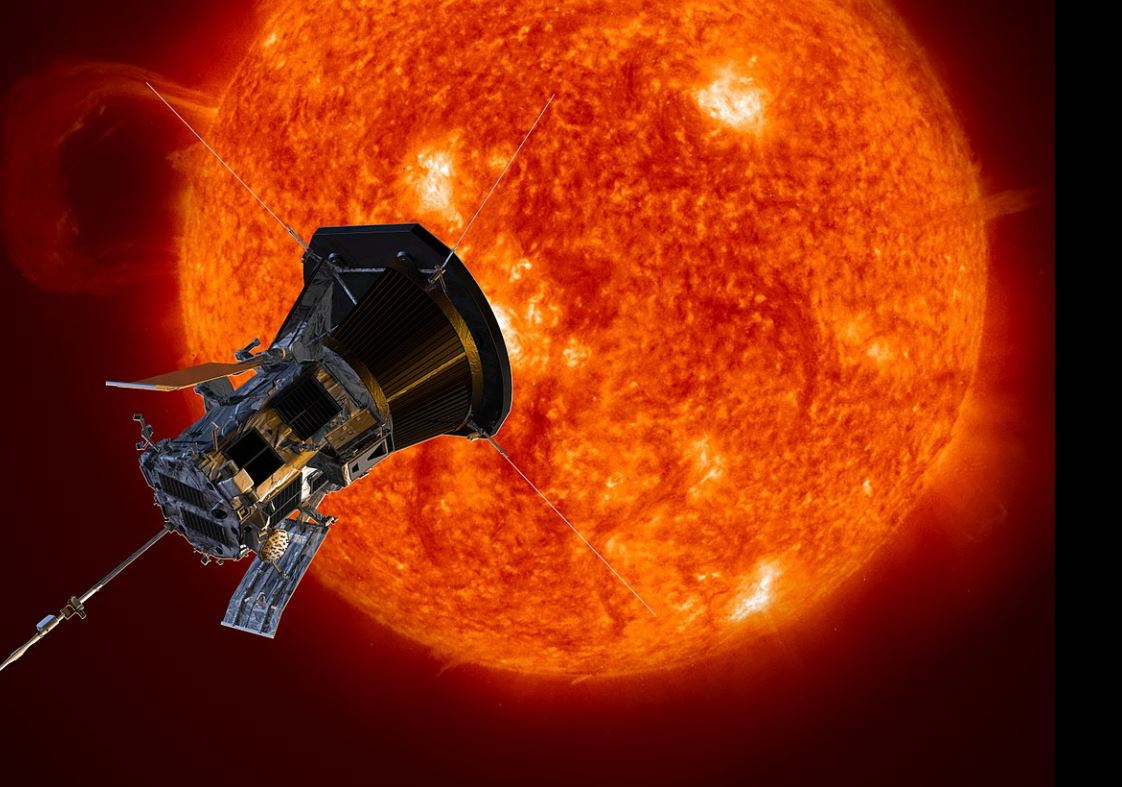
Professor Harra is one of the team working on the European Space Agency's Solar Orbiter mission, which launches in February 2020 on a seven-year mission to uncover some of the Sun's secrets. She is an Affiliate Professor of Solar Astrophysics at ETH Zurich and director of the Physical Meteorological Observatory Davos (PMOD) and the World Radiation Center (WRC).
Image: ESA/ATG medialab
As part of the team working on the Orbiter's imaging equipment, including the Extreme Ultraviolet Imager, which will provide images of the solar atmospheric layers above the Sun's 'surface', and the X-ray Spectrometer and Telescope, that will allow scientists to analyse X-ray emissions from the Sun.

As part of the team working on the Orbiter's imaging equipment, including the Extreme Ultraviolet Imager, which will provide images of the solar atmospheric layers above the Sun's 'surface', and the X-ray Spectrometer and Telescope, that will allow scientists to analyse X-ray emissions from the Sun. After launch the Orbiter will take almost two years to reach its operational orbit using gravity assist manoeuvres around the Earth and Venus - a kind of slingshot effect in which a spacecraft uses a planet's gravity to alter its speed and direction. Along the way it will gather information about solar winds.

"It's hard to determine exactly where the solar wind comes from and how it is created," says Professor Harra. "This mission will hopefully give us a much greater understanding."

The spacecraft's operational orbit will, at its closest to the Sun, take it slightly closer than the orbit of Mercury. With each pass it will be able to gather vital data. The spacecraft will be in position for five years but with each orbit of the Sun taking around 150 days, the team will have only a dozen or so opportunities to gather data, so each orbit will be devoted to gathering information on a specific question.
There are many challenges in a mission of this nature, not least of which is protecting the spacecraft's sensitive instruments from the heat of the Sun. At its closest, the Orbiter will be exposed to around 500C. Even the solar panels that will power the craft had to be specially designed, as the typical ones used on spacecraft are not built to handle those temperatures.

Protecting the Orbiter's sensitive instruments is a heat shield that ensures the imaging equipment and other sensors are exposed to just 20C - close to a normal room temperature.

A second challenge is getting data back from the Orbiter during its mission. Radio communications back to Earth require a line of sight, even across such vast distances, so it won't be possible to get information back from the Orbiter while it's behind the Sun, for example.

That means data needs to be stored onboard and the Orbiter's computers have to be programmed to manage the data efficiently, not storing unnecessary information or wasting time transmitting poor-quality data. Getting that right means giving the Orbiter a higher degree of 'autonomy' than a spacecraft in Earth orbit would need.

As technology advances, future missions might be able to get even closer to the Sun. Greater heat shields would be needed but innovations such as solar sails might one day make it possible for a craft to hover over the Sun's poles. For now, though, the Solar Orbiter has the potential to vastly expand our knowledge of the Sun.

February's launch, from Cape Canaveral, in Florida, USA, will begin the actual mission but years of work have already been done in developing each individual component, putting them together as they will be in the Orbiter then testing again, and so on. Every eventuality has been considered and planned for but, as with any space mission, there is a lot that can go wrong.
"I'll be there watching in February, with butterflies in my stomach!"
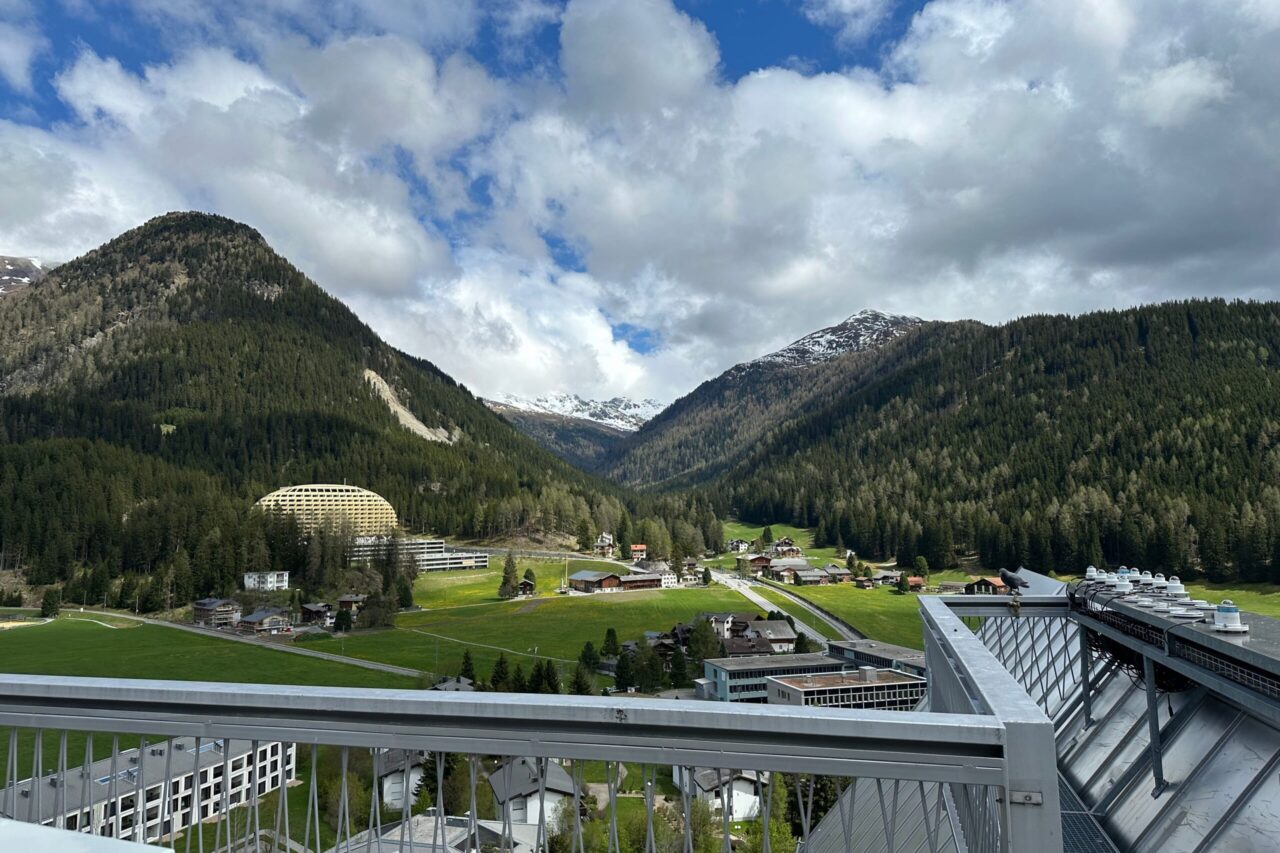
– Professor Louise Harra

Related Posts

Professor Lint Barrage at Treffpunkt Science City 16 Nov. 2025.

Energy As A Lifeline: Rethinking Prosperity And Climate Responsibility

December 4, 2025

Digital Einstein’s Year of Adventures and Reinvention

November 27, 2025
Prof. Dr. Andreas Wallraff and Indian Minister N.S. Boseraju and his delegation at ETH Quantum Center.

Strengthening Global Quantum Connections: India and ETH Zurich Join Forces

November 25, 2025
  • global.ethz.ch

  • Subscribe to our Newsletter

    Check your inbox or spam folder to confirm your subscription.

© ETH Zurich Disclaimer: The views and opinions expressed in this blog do not necessarily reflect those of ETH Zurich. In addition, ETH Zurich is not responsible for the content of external links.
Data Protection
Newsletter

Check your inbox or spam folder to confirm your subscription.

#Africa #Asia-Pacific #Climate Change #computer science #CYBATHLON #Diversity & Inclusion #Energy Transition #Engineering #ETH4Development #ETH Alumni #ETH Global Lecture #ETH Studios #Europe #Events #Exchange Programme #Food #Food System #Foresight #Future of Work #Health #How we connect #How we cope #How we learn and work #How we reflect #How we respond creatively #Information Technology #Innovation in Architecture #Latin America #Machine Learning #Mathematics #North America #Public Policy #Quantum #RETHINKING LIVING #Robotics #Science-Policy Interface #Smart Cities #South Asia #Sports #Summer School #Sustainable Development Goals #TECH #togETHer #WE ARE ETH #your 2040